Indexing Data Sources
Learn how to index data sources for better searchability and access.
Once a data source is added to the AI/Run CodeMie platform, you can proceed with indexing it. Indexing enables assistants and workflows to interact with the data within the data source. Assistants can only access data that has been indexed, so you need to re-index the data source each time it is updated. Otherwise, AI/Run CodeMie will not recognize the new data.
Automatic Indexing
By default, AI/Run CodeMie automatically indexes new data sources as soon as they are added to the platform:
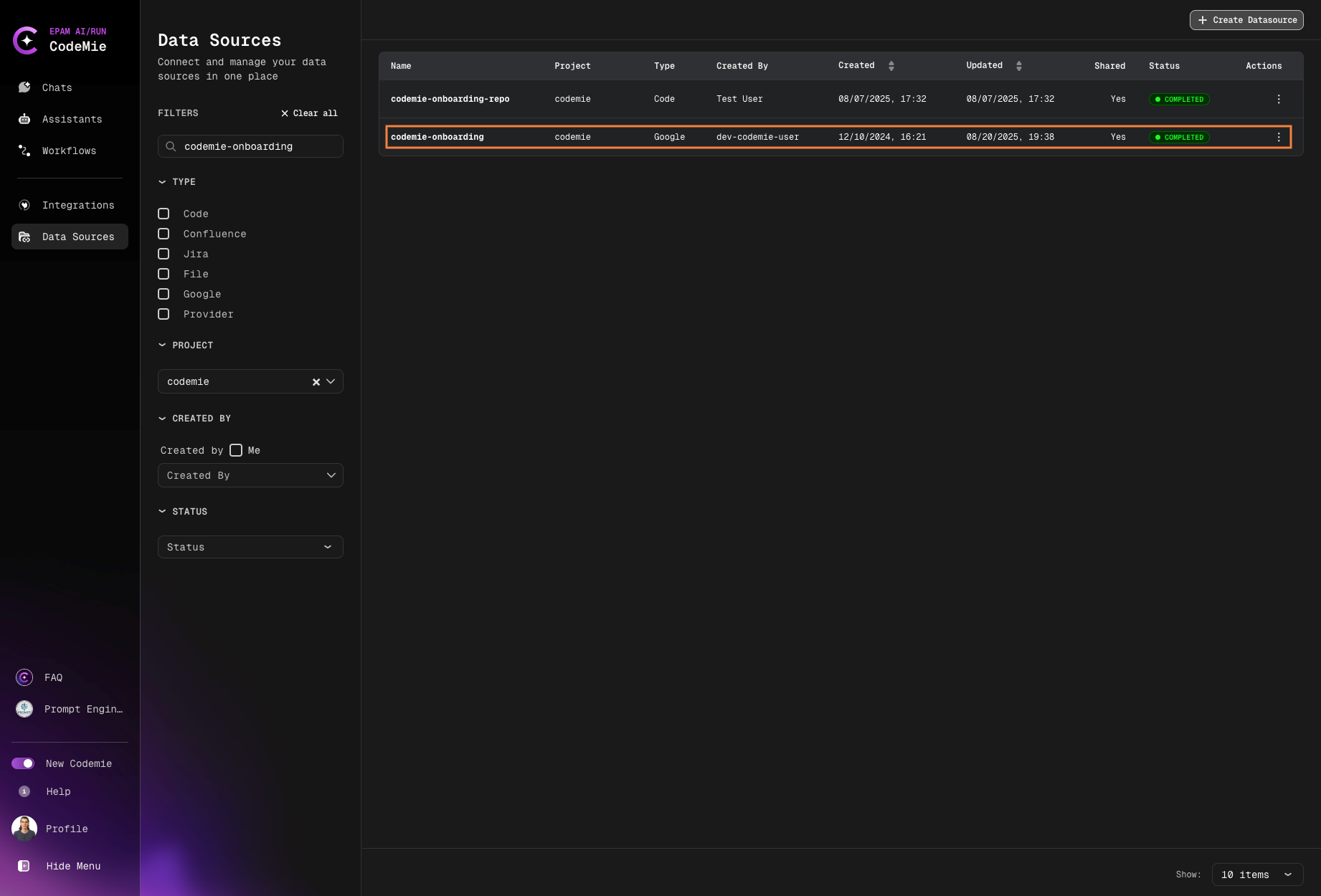
You don't have to wait till a data source is fully indexed. You can already add this data source into your assistants.
If you add a data source before indexing completes, assistants will only access already-indexed content. Wait for full indexing for complete coverage.
Manual Reindexing
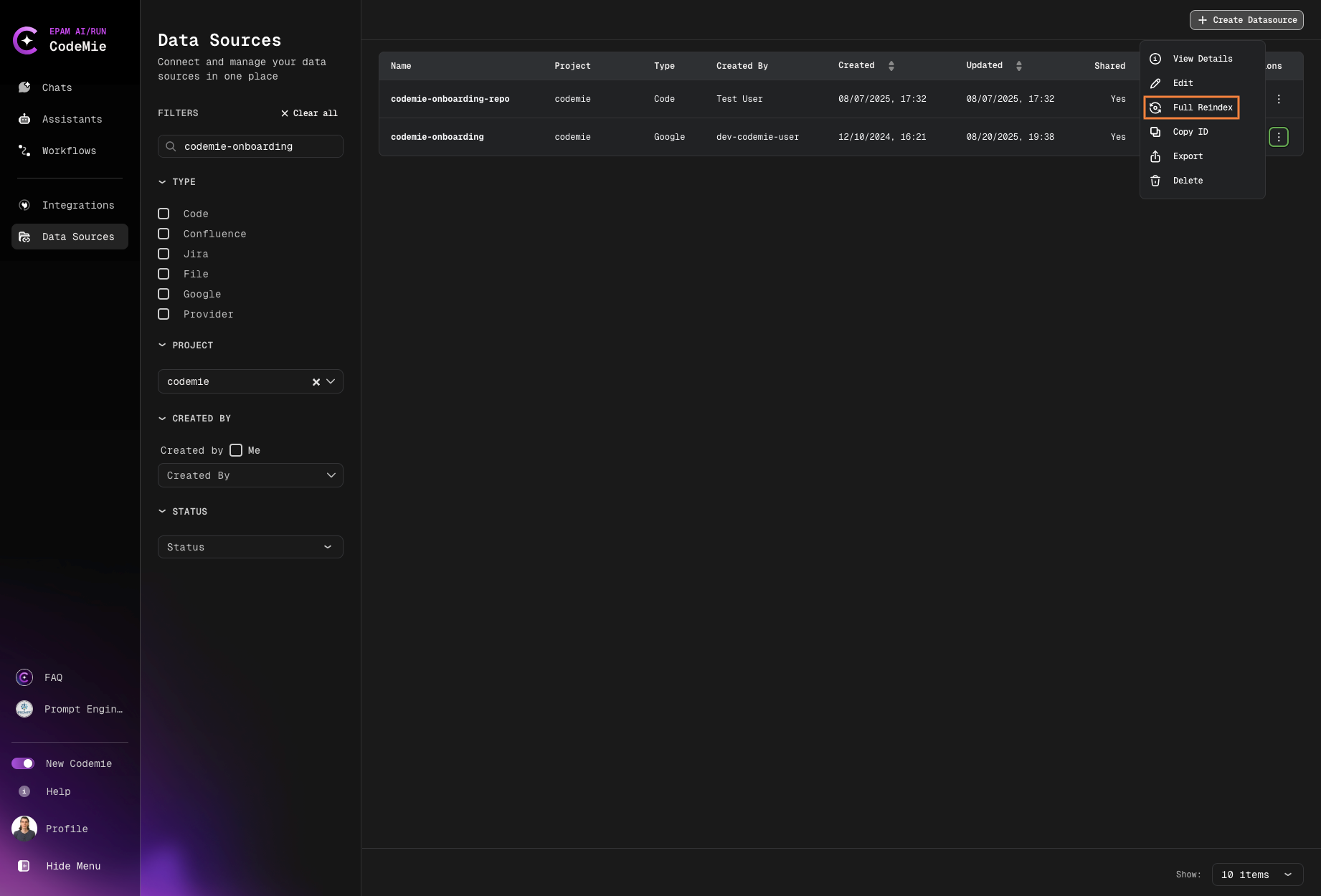
To manually trigger data source reindexing, click the actions button and select Full Reindex or Incremental Index:
Indexing Types
Full Reindex
A complete reindexing of the data source. This involves scanning and updating all data from the source, regardless of any changes.
When to use Full Reindex:
- After major updates to the data source
- When data integrity issues are suspected
- For initial indexing of large data sources
- When switching indexing strategies or configurations
Incremental Index
This option is currently only supported for Jira data sources. With this option only new or changed data from the source will be updated. It only reindexes the data that has been modified since the last reindex.
When to use Incremental Index:
- For frequent, small updates to Jira data sources
- To save time and resources on large Jira projects
- For regular synchronization of Jira issues
- When only recent changes need to be reflected
Incremental indexing is currently only available for Jira. Other data sources require full reindexing. We're working on expanding this feature.
Full reindex is also available on Data Source Details page: Data Source tab → Selected data source → 3 dots → View → scroll the page to the bottom
Resuming Indexing
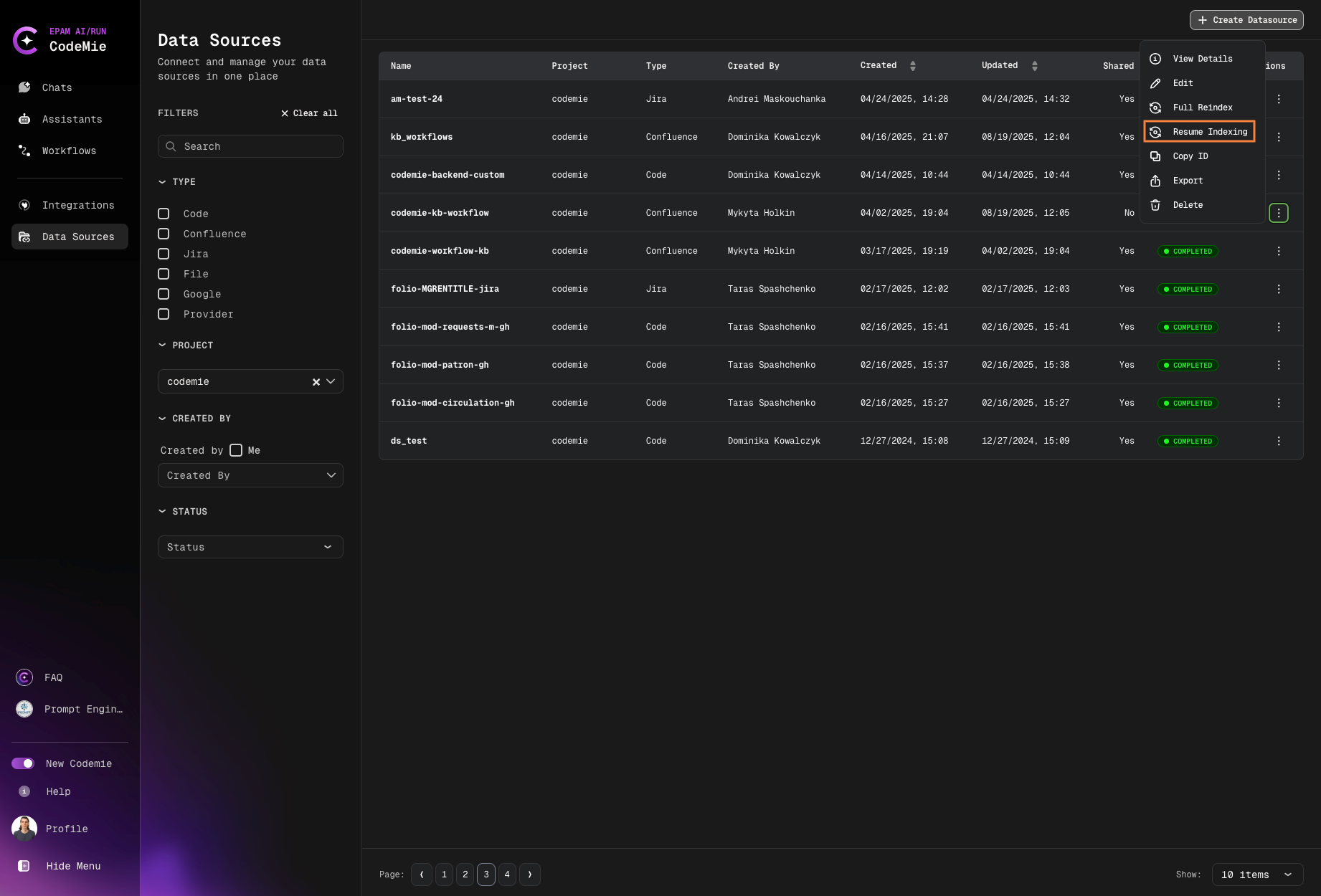
If indexing is interrupted or paused, you can resume the process by clicking the Resume Indexing button:
Indexing Best Practices
Regular Reindexing Schedule
- Git Repositories: Reindex after major commits or releases
- Confluence: Reindex when documentation is updated
- Jira: Use incremental indexing for daily updates, full reindex weekly or monthly
- Files: Reindex when files are modified or replaced
- Google Docs: Reindex after document updates
Automatic reindexing on data source changes is planned for future releases. Currently, all reindexing must be triggered manually.
Monitoring Indexing Status
Keep track of your data source indexing status:
- Check the STATUS column in the data sources list
- Monitor indexing progress for large data sources
- Verify successful completion of indexing operations
- Review any indexing errors or warnings
Optimizing Indexing Performance
- Schedule Large Reindexes: Perform full reindexes during off-peak hours
- Use Incremental Indexing: Leverage incremental indexing for Jira when possible
- Batch Updates: Group multiple changes before triggering reindex
- Clean Up First: Remove outdated or unnecessary data before reindexing
Full reindex replaces all existing indexed data. If your data source has changed significantly (e.g., repository deleted, Confluence pages removed), those items will be removed from search results.
Indexing Status Indicators
Data sources display different statuses during the indexing process:
- Indexing: Currently being indexed
- Indexed: Successfully indexed and ready to use
- Failed: Indexing encountered an error
- Pending: Waiting to start indexing
- Paused: Indexing process is paused
Now your data sources are indexed and ready to be used by assistants and workflows for enhanced AI-powered operations.