Add AWS Knowledge Bases as Data Source
Connect and index AWS Knowledge Bases as data sources.
AWS Knowledge Bases is a powerful data source in AI/Run CodeMie, enabling assistants to access information stored in Amazon Bedrock Knowledge Bases. This guide walks you through the process of setting up AWS IAM credentials and adding AWS Knowledge Bases as a data source.
Prerequisites
This data source requires you to have at least one AWS integration added to AI/Run CodeMie. For more details, please refer to the Integrations Overview guidelines.
Before adding an AWS Knowledge Bases data source, ensure you have:
- An active AWS account with access to Amazon Bedrock
- AWS Knowledge Base already created in your AWS account
- Permission to create IAM users and access keys
- Understanding of AWS IAM policies and permissions
- AWS Knowledge Base ID ready
AWS Knowledge Bases (part of Amazon Bedrock) let you index large-scale enterprise data. This integration is ideal for companies already using AWS infrastructure.
AWS IAM Setup
Before creating an AWS integration in AI/Run CodeMie, you need to set up an IAM user with appropriate permissions in your AWS account.
Step 1: Create IAM User
1. Log into your AWS account
Navigate to the AWS Management Console and log in with your credentials.
2. Access IAM Service
In the search bar, enter IAM to access the Identity and Access Management service.
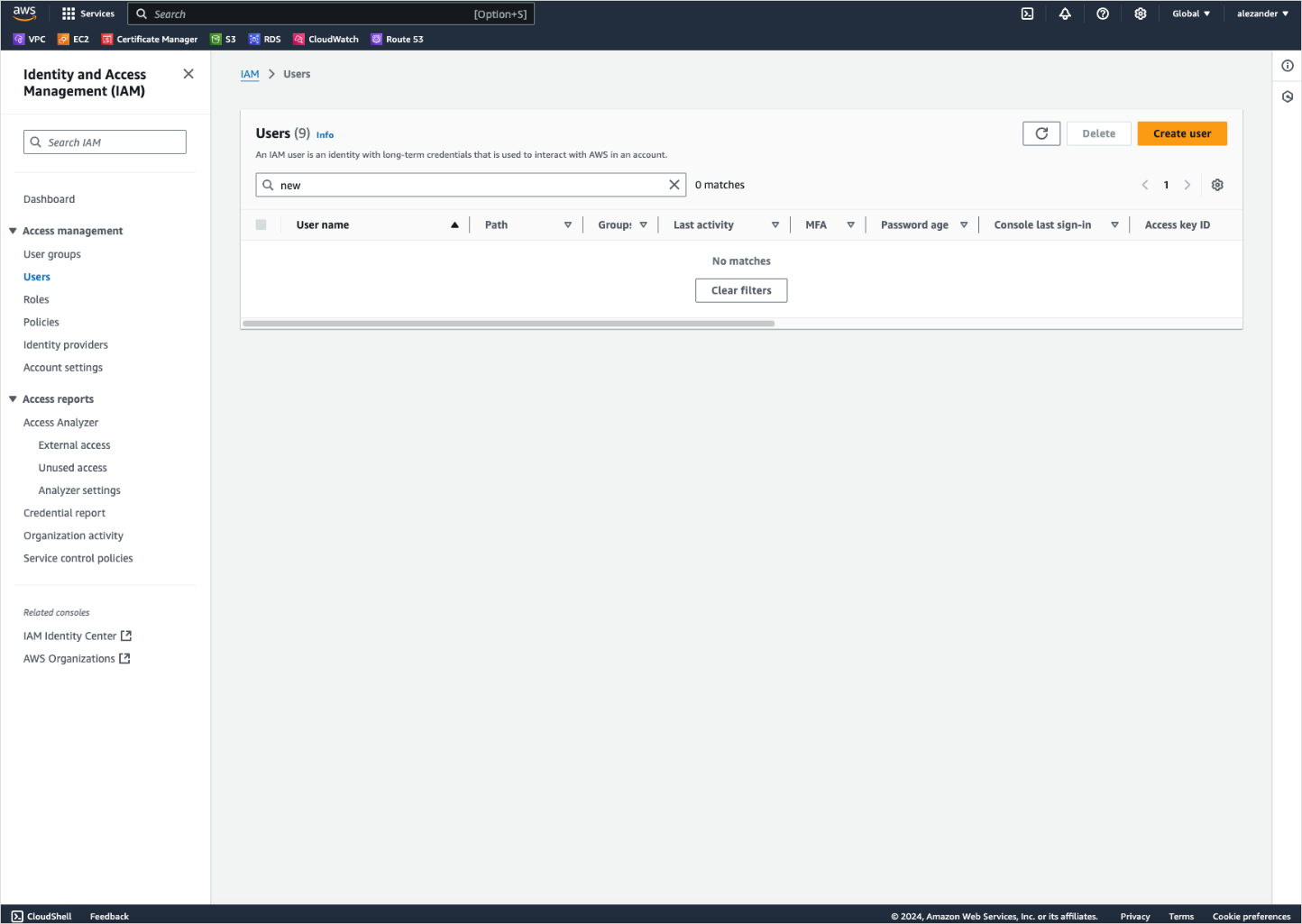
3. Navigate to Users
Navigate to Access management → Users. Click Create user:
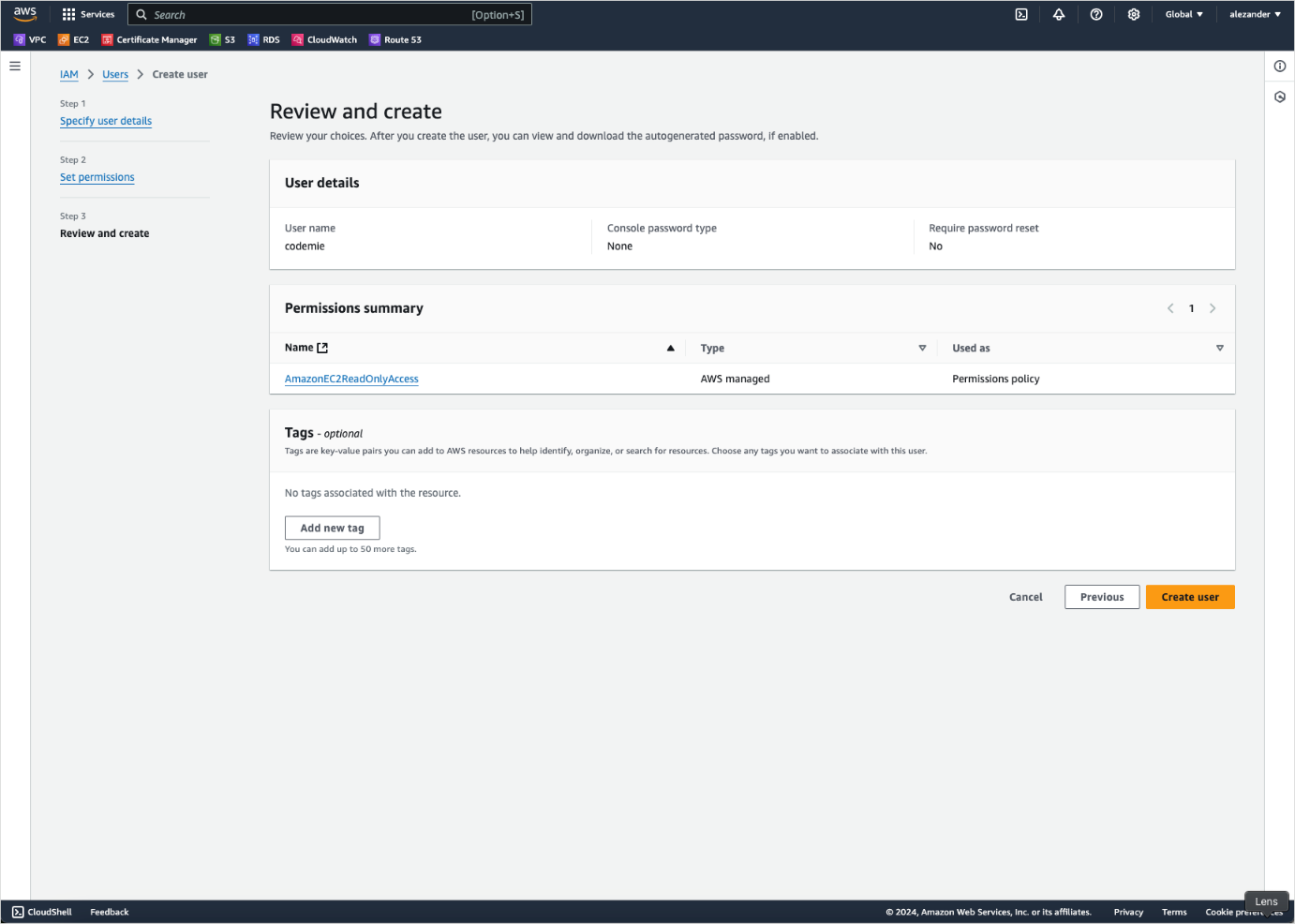
4. Set User Details
User name: Provide a descriptive name for the IAM user (e.g., codemie-kb-user)
Best practices for user naming:
- Use descriptive names indicating the purpose (e.g.,
codemie-bedrock-access) - Follow your organization's naming conventions
- Include service or application name for easy identification
5. Set Permissions
Click Next to proceed to the permissions setup.
6. Attach Policies
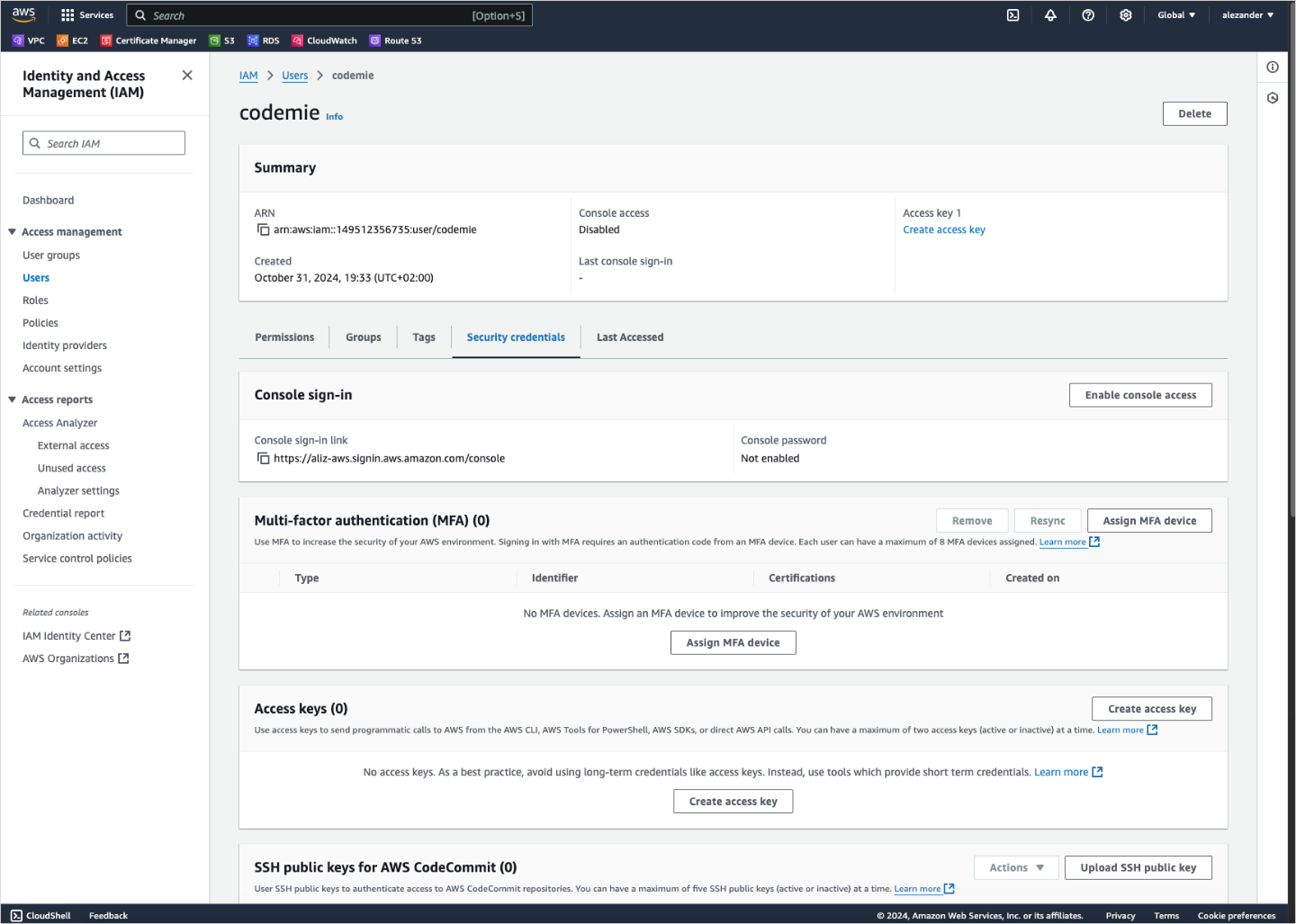
Attach the following AWS managed policy:
- AmazonBedrockFullAccess - Provides full access to Amazon Bedrock services including Knowledge Bases
For production environments, consider creating a custom policy with more restrictive permissions that only allow access to specific Knowledge Bases. The AmazonBedrockFullAccess policy grants broad permissions and should be used carefully.
Never use AmazonBedrockFullAccess in production. Always create custom IAM policies with least-privilege access to specific Knowledge Base ARNs.
Alternative: Custom Policy
For more granular control, create a custom policy with these permissions:
{
  "Version": "2012-10-17",
  "Statement": [
    {
      "Effect": "Allow",
      "Action": [
        "bedrock:GetKnowledgeBase",
        "bedrock:ListKnowledgeBases",
        "bedrock:Retrieve",
        "bedrock:RetrieveAndGenerate"
      ],
      "Resource": "*"
    }
  ]
}
This custom policy grants only the minimum permissions needed:
GetKnowledgeBase: Read KB metadataListKnowledgeBases: Discover available KBsRetrieve: Query the knowledge baseRetrieveAndGenerate: Generate responses with KB context
7. Review and Create
Review the user configuration and click Create user.
The IAM user has been successfully created.
Step 2: Create Access Keys
After creating the IAM user, you need to generate access keys for programmatic access.
1. Select the User
From the Users list, click on the newly created user.
2. Create Access Key
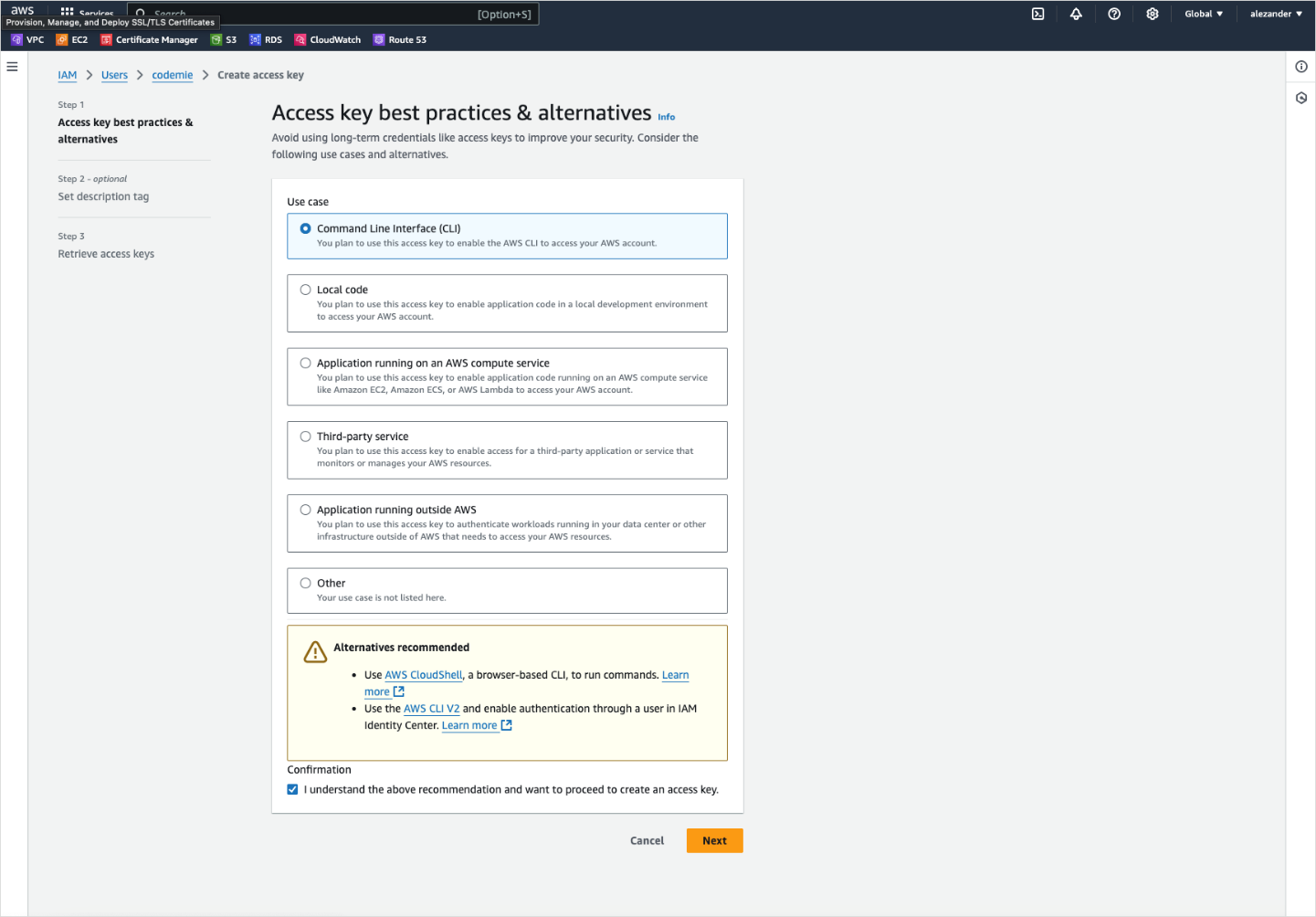
Navigate to the Security credentials tab and scroll to Access keys section.
Click Create access key.
Third-party service is the appropriate option when granting access to external applications like AI/Run CodeMie.
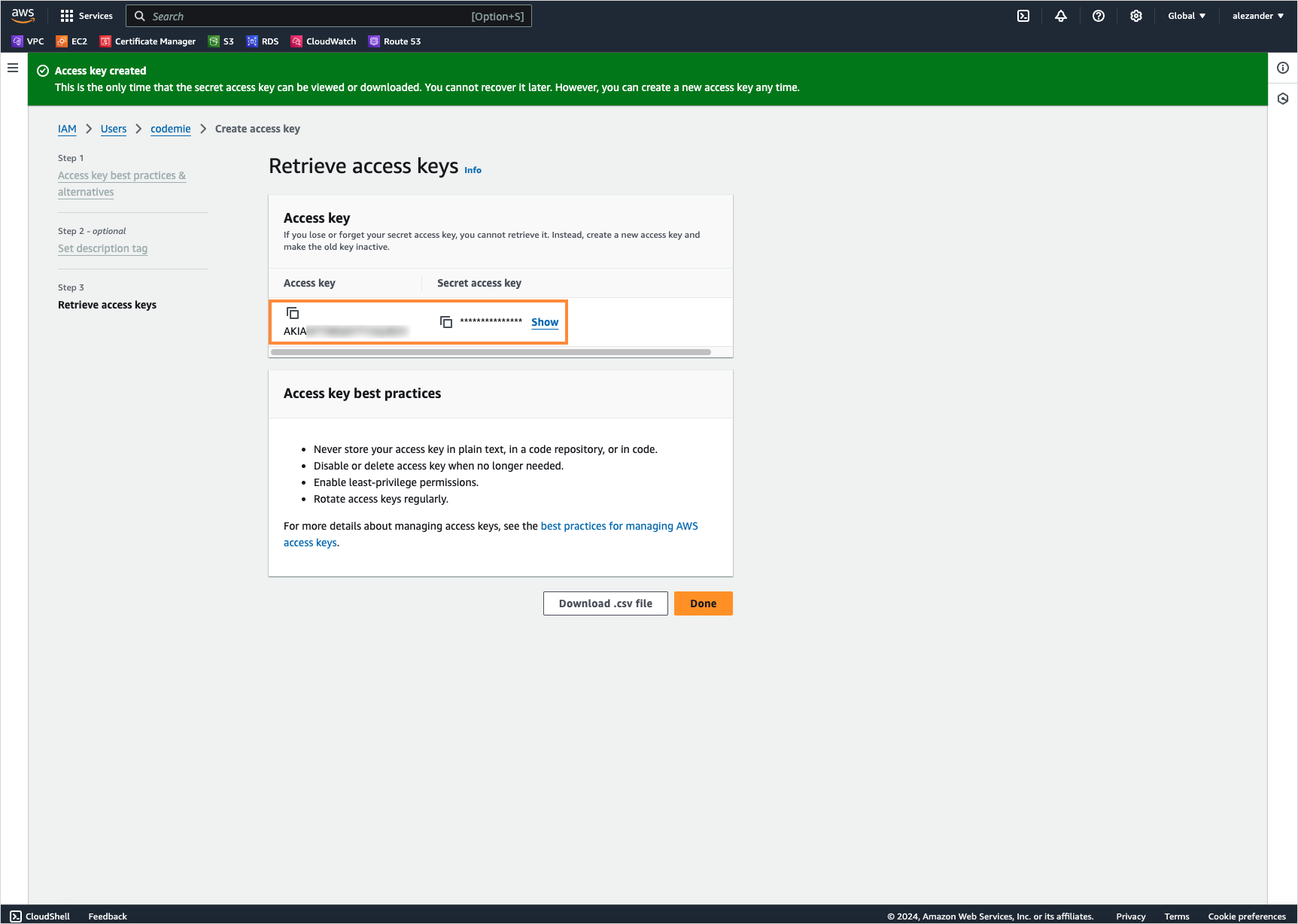
Download your access keys immediately and store them securely. AWS shows them only once. If lost, you must create new access keys.
4. Retrieve Access Keys
- In the AI/Run CodeMie main menu, click the Integrations button.
- Select User or Project and click the + Create button.
- Fill in the required fields and click Create:
- Project Name: Specify project name.
- Credential Type: AWS
- Alias: Specify the integration name.
- Region: Specify the AWS Region to work in.
- Access Key ID: Paste the Access Key ID data copied from preview step.
- Secret access key: Paste the Secret Access Key data copied from preview step.
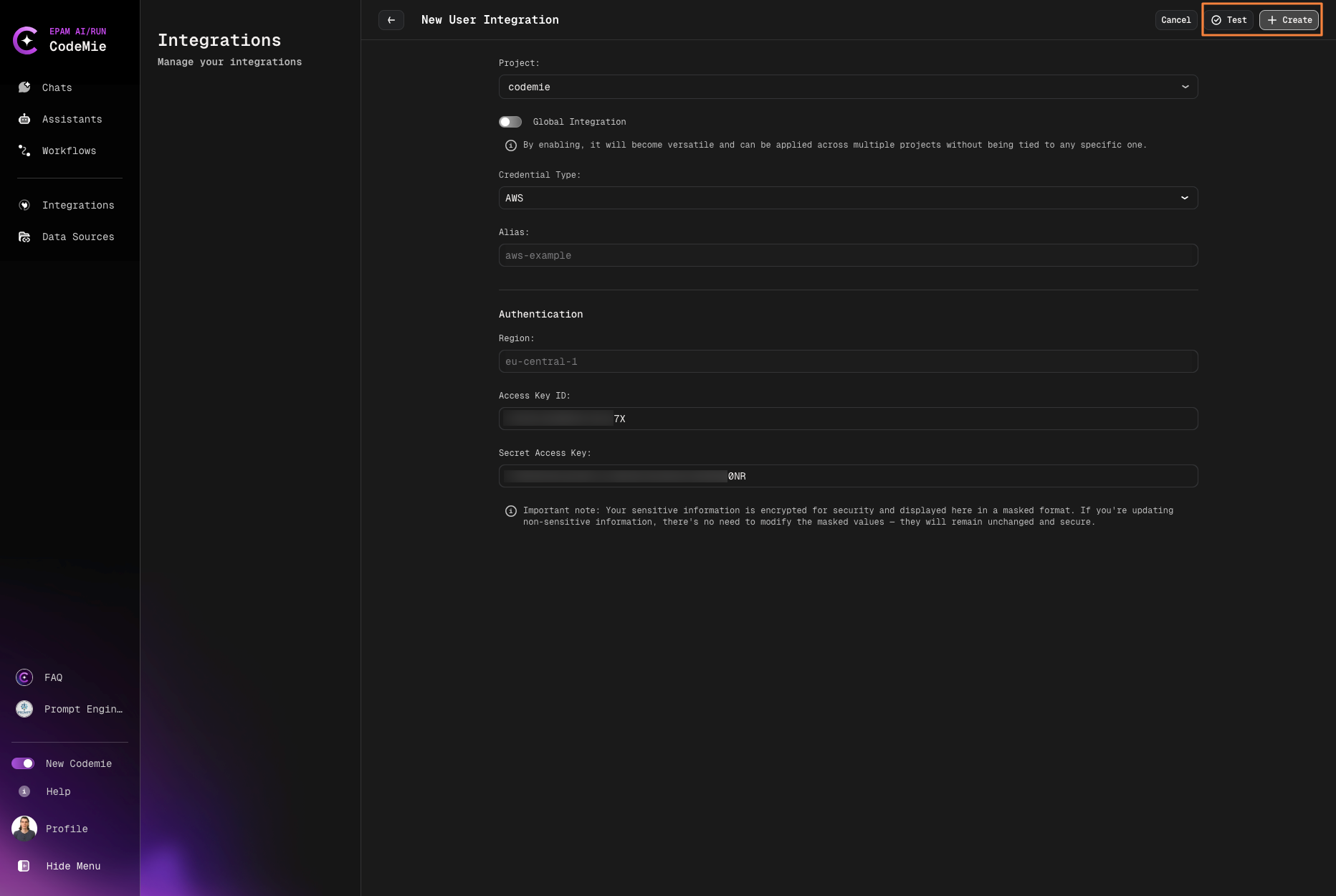
You can “Test Integration” connection before creating.
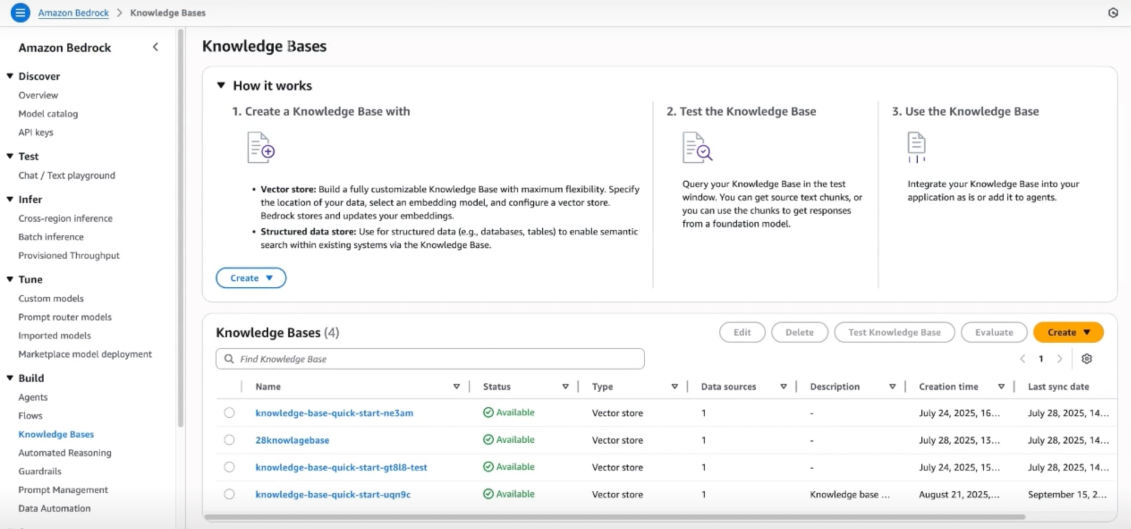
To verify connection click on Profile Icon -> Settings -> EXTERNAL VENDORS -> Knowledge Bases
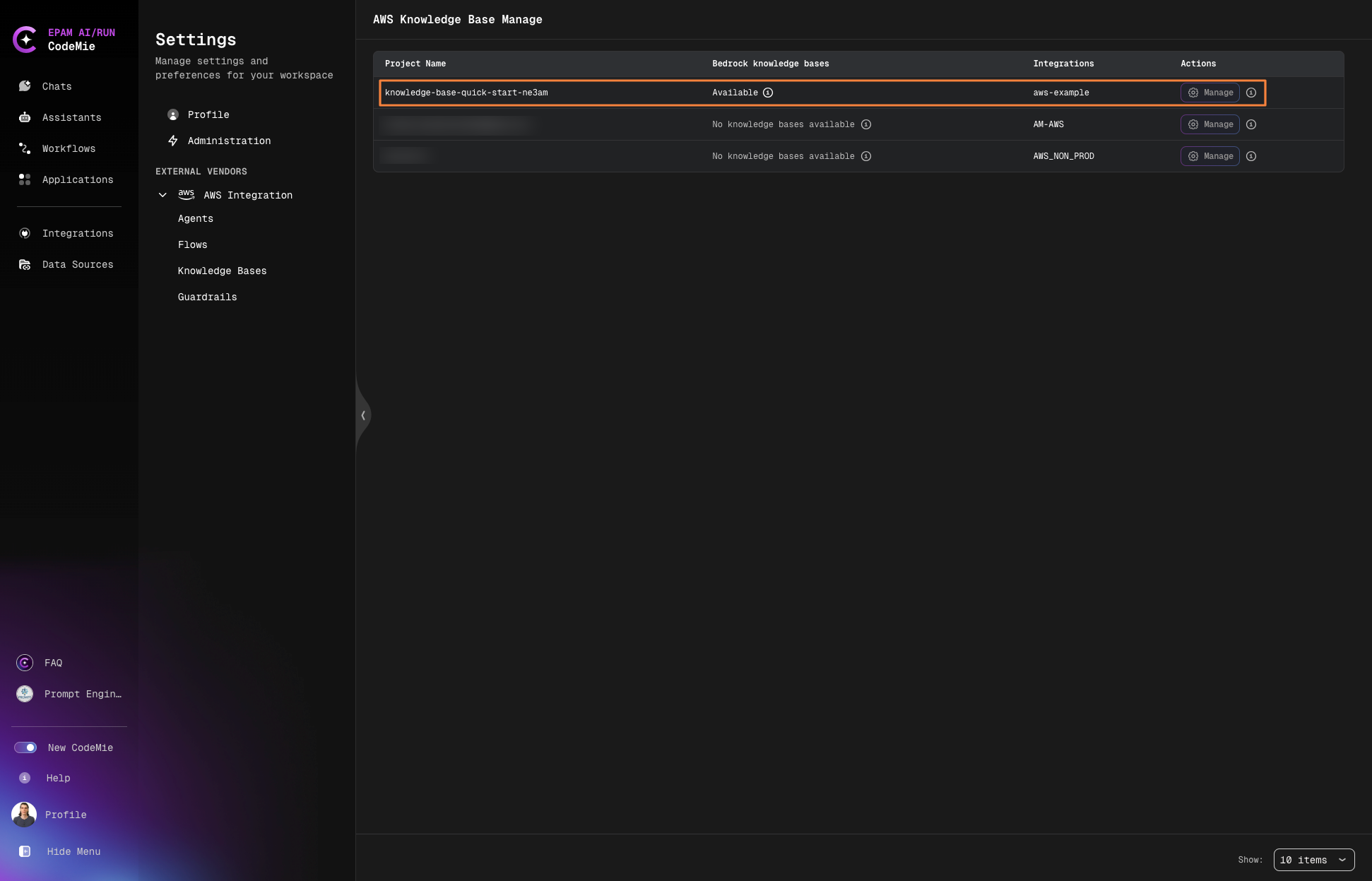
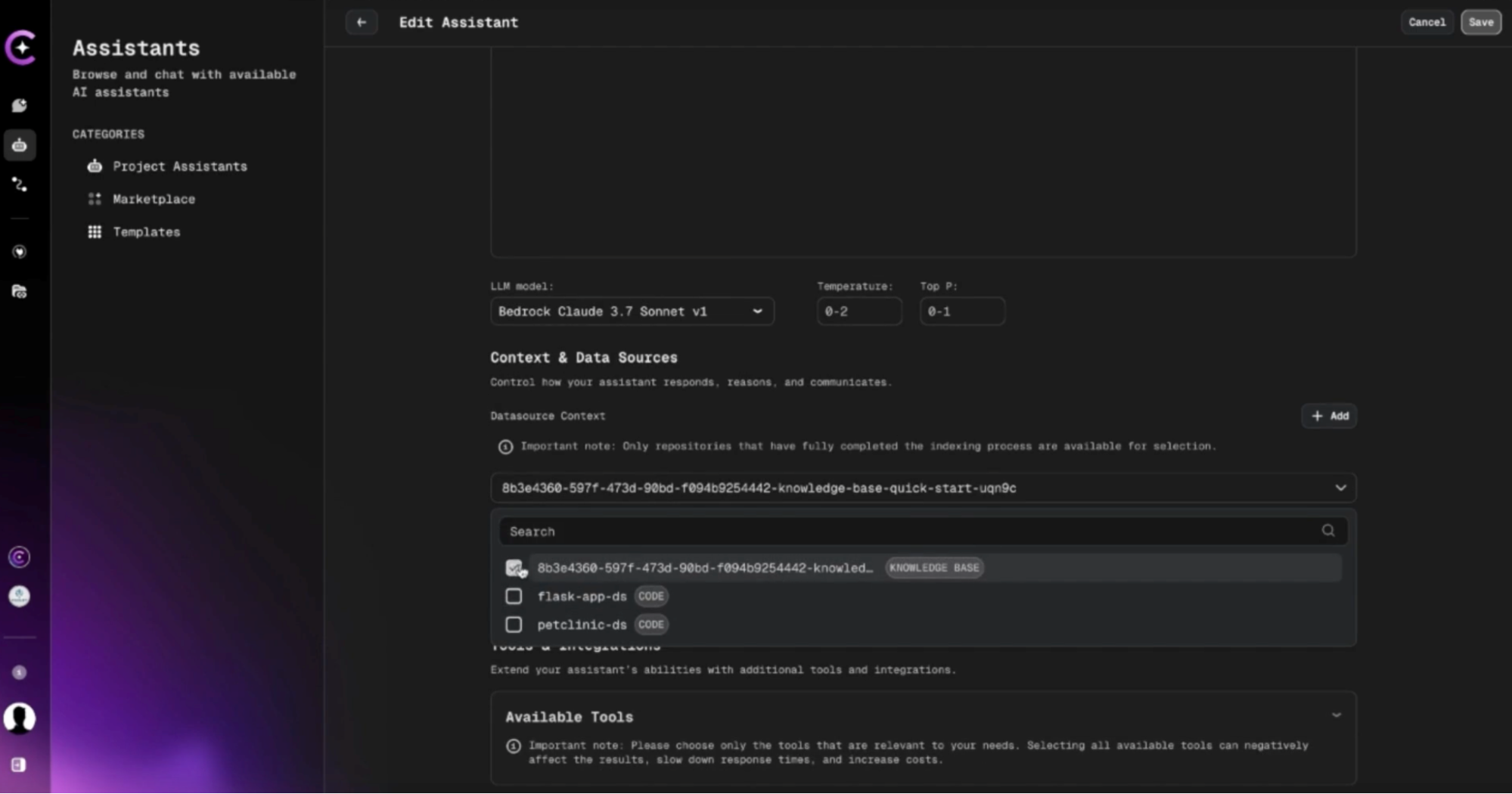
Now you can select data source from the drop down list in Data Source Context section of your assistant: